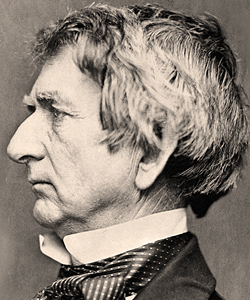
As the numbers of slaves taking advantage of the fighting to flee from bondage grew, the fact remained that the Fugitive Slave Law of 1850 was still the law of the land. Confusion over how the fugitives should be treated plagued federal civilian and military officials from Kentucky to Virginia. Secretary of State William Henry Seward wrote to Major-General George Brinton McClellan, commander of all Union troops outlining how he was to proceed on the matter in the District of Columbia. The Fugitive Slave Law was essentially to be suspended in the District of Columbia. Fugitives were to be protected from custody and any civilians who attempted to hold a fugitive were themselves to be subject to military arrest. Such efforts did not end the confusion over the treatment of "contrabands," however, and only added to the pressure for a comprehensive solution to the slavery question. (By John Osborne)
Record Data
Source citation
"Contrabands in District of Columbia," in Frank Moore, ed., The Rebellion Record: A Diary of American Events, with Documents, Narratives, Illustrative Incidents, Poetry, Etc. (New York: G.P.Putnam, 1862), III: 452.
Transcriber
Transcription adapted from The Rebellion Record (1862), edited by Frank Moore
Adapted by John Osborne, Dickinson College
Transcription date
12/07/2011
Transcription
The following transcript has been adapted from The Rebellion Record: A Diary of American Events, with Documents, Narratives, Illustrative Incidents, Poetry, Etc. (1862).
DEPARTMENT Of STATE,
WASHINGTON CITY, December 4, 1861.
To Major-General George B. McClellan, Washington:
GENERAL : I am directed by the President to call your attention to the following subject:
Persons claimed to be held to service or labor under the laws of the State of Virginia, and actually employed in hostile service against the Government of the United States, frequently escape from the lines of the enemy's forces and are received within the lines of the army of the Potomac. This Department understands that such persons, afterward coming into the city of Washington, are liable to be arrested by the city police, upon presumption, arising from color, that they are fugitives from service or labor.
By the fourth section of the act of Congress approved August 6th, 1861, entitled " An Act to confiscate property used for insurrectionary purposes," such hostile employment is made a full and sufficient answer to any further claim to service or labor. Persons thus employed and escaping are received into the military protection of the United States, and their arrest as fugitives from service or labor should be immediately followed by the military arrest of the parties making the seizure.
Copies of this communication will be sent to the Mayor of the city of Washington and to the Marshal of the District of Columbia, that any collision between the civil and military authorities may be avoided.
I am, General, your very obedient,
WM. H. SEWARD.
People
Full name
Abraham Lincoln